maandag 25 maart 2013

Pretty Poems: Scél Lemm Dúib

Hi guys!

One of the many things I love about Celtic stuff are the medieval Irish and Welsh poems. They always have a different rhyme than we have, or a different metre, and definitely different metrical rules. And more often than not, the sound of the words together is the art, not the meaning per se. That makes them difficult to translate, because you lose a lot of the magic of the original.
So here is an Irish poem from the 9th or 10th century, with a translation, but be sure to look at the Irish original as well, even if you can't understand it! If I could read it to you all, I would.
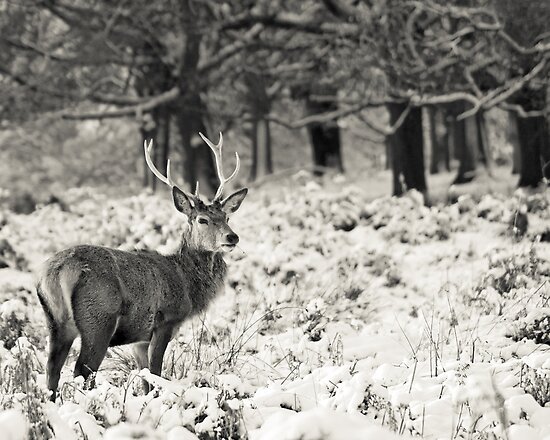
It's really fitting for this time of the year: I want spring and I want it now, but it still seems to be winter.. So a wintery poem!

Scél lemm dúib              'I bring news to you'
dordaid dam                                bells a stag
snigid gaim                         'the winter snows
ro-fáith sam                    the summer is gone

gáeth ard úar                   high and cold wind
ísel grían                                          low sun
gair a rith                              short its course
ruirthech rían                              swift ocean

rorúad rath                            russet bracken
ro-cleth cruth                   shapes are hidden
ro-gab gnáth              suddenly a wild goose
giugrann guth                         raised its voice

ro-gab úacht                         cold has taken
etti én                              the wings of a bird
aigre ré                                     a time of ice
é mo scél                             this is my news'

This is my own translation, but I based myself on the translation of James Carney, from 'Medieval Irish Lyrics'. His translation is a poëtical one and I wanted to stay as true to the Irish version itself as possible.

Until next time,
Lian

Sources photography: photo by Peter Denness on redbubble.com


dinsdag 19 maart 2013

Linguistical Fun: w and ll

Hi guys!

This week I'd like to resolve some of the mystery people tend to feel towards the Welsh language. Let me say firstly that Welsh is not my strong point, there are a lot of people out there who know this stuff better then I do. But they don't write blogposts about it. 
One of the things people say when I tell them I study Celtic languages and that Welsh is one of them, is 'haha, no one can pronounce that because the language consists only of consonants.' Well of course it doesn't, why would someone speak a language that is unpronouncable!? Unfortunately not many people are actually interested when I start explaining, they just want to make fun of the Welsh language.  Tsk. 


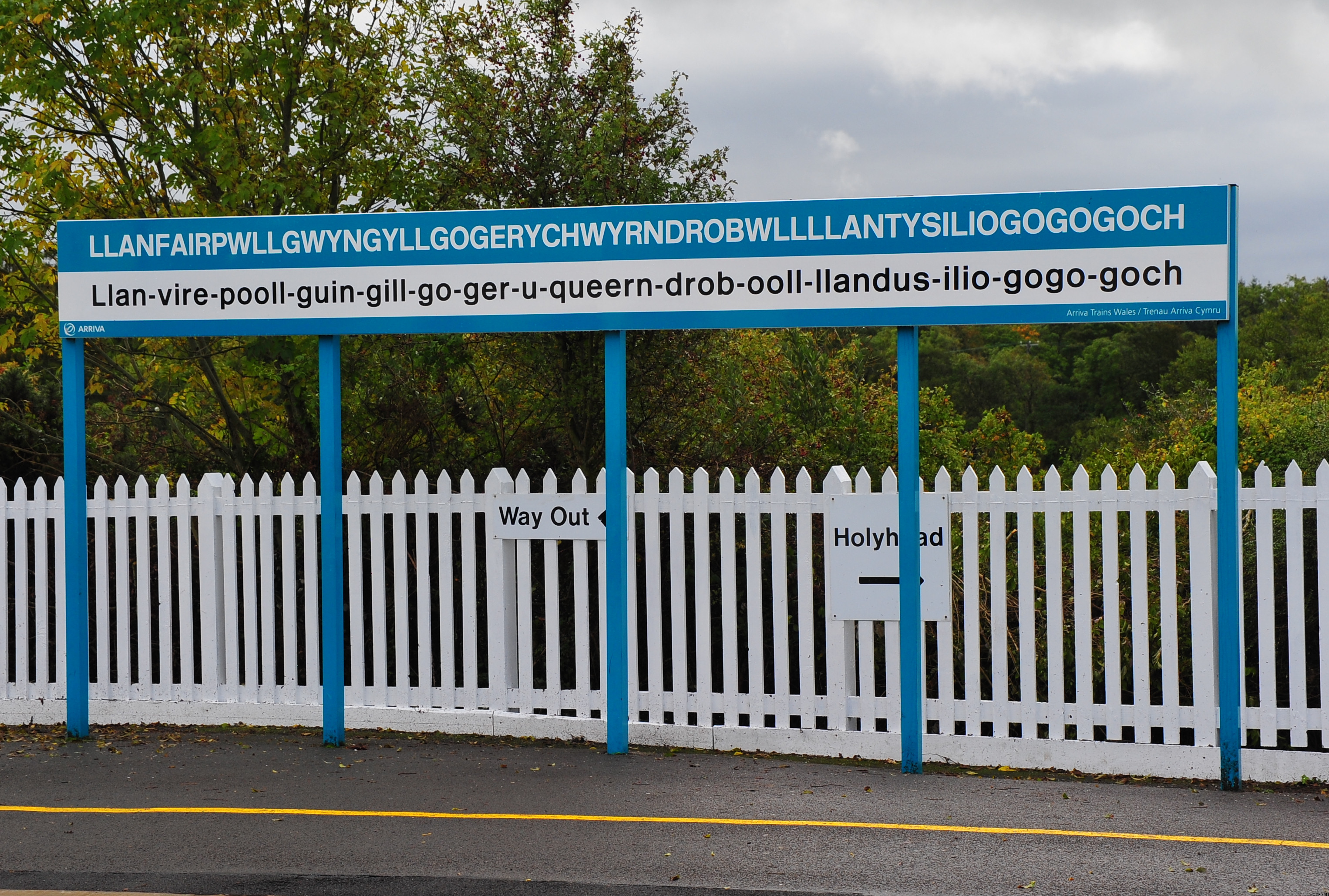
The problem starts of course with the infamous town name of Llanfairpwllgwyngyllgogerychwyrndrobwollllantsyliogogogoch. Nonsense, why would someone not be able to pronounce that? Unfortunately, the town isn't really called Llanfairpwllgwyngyllgogerychwyrndrobwollllantsyliogogogoch, it was named thus in the 19th century to attract tourists. Well, they've succeeded. Among the Welshmen it is simply known as 'Llanfairpwll'. 

But the thing that seems most frightening about the Welsh language is the apparant lack of vowels! Well, fret no more, because the w? Not a consonant, just a vowel pronounced like the o  in who? And then, it's suddenly not so frightening anymore. The Middle-Welsh word for 'man', gwr, is not pronounced gwr, but goor or something like that (it's hard to write this without using the phonetic alphabet.. just bear with me.) 

Next problematic thing in the Welsh language is the double l. Not pronounced like in 'llllloverboy', of course, but a sound that comes close to the cl in 'close'. But not really so. OK, put your tongue in your mouth like you wanna say 'l'. Done? Now smile! You look ridiculous but you are nearly there. Now blow as much air out of your mouth without moving your tongue, and this will come close to the sound of the /ll/. If you do this with a lot of noise, you're there! Congratulations, you are now able to pronounce Welsh. 

(Of course this is a simplification, blabla, and the /ll/ is pronounced differently at the end of a word than at the beginning of a word and no doubtedly the North Welshmen pronounce it differently than the South Welshmen, but I won't bore you with that)

See you next time!

Lian

Sources photography: wikipedia

zondag 10 maart 2013

Music: Séamuisín..

Hi there!!

This is a song we sang in Irish class, and even though that's like two years ago, I still have a weak spot for it.  It's about a mother who is looking for her son, Séamus. (although this version is sung by a man, it's not less cute)
-> http://www.youtube.com/watch?v=nTgbLVzWwMs&feature=related <-


Here are the lyrics and my translation:

An bhfaca tú mo Shéamuisín?                           Did you see my little Séamus?
Mo mhuirnin óg, mo bhuachaillín?                     My young sweetheart, my little boy?

An bhfaca tú mo Shéamuisín?                           Did you see my little Séamus?
Is é dul síos an bothar                                       It was him going down the road

Níl brog ar bith ar a dhá choisín                         Not a shoe on his two little feet
Ar a dhá choisín ar dhá choisín                          On his two little feet, on his two little feet,
Níl brog ar bith ar a dhá choisín                         Not a shoe on his two little feet
Níl caipín air, ná clocá                                       Not a cap on him, or a coat

O grá mo chroí mo Shéamuisín,                         O my love, my heart, my little Séamus
Mo mhuirnin is, mo bhuachaillín                          My sweetheart and my little boy
Grá mo chroí mo Shéamuisín                              Love, my heart, my little Séamus
Maidin 'gus trathnonín                                        Morning and evening

Tá leabharín buí ina lamh aige                             There is a little book in his hand
ina lamh aige, ina lamh aige                                 In his hand, in his hand
Tá leabharín buí ina lamh aige                             there is a little book in his hand
Ag dul ar scoil trathnona                                     going off to school

Ar a dhroim tá mailin beag                                On his back there's a little backpack
Tá mailin beag, tá mailin beag,                           A little backpack, a little backpack
Ar a dhroim tá mailin beag                                On his back there's a little backpack
Is a lóinín ann is docha                                      With his little lunch in it, probably

An bhfaca tú mo Shéamuisín?                              Did you see my little Séamus?
Mo mhuirnin óg, mo bhuachaillín                          My young sweetheart, my little boy

An bhfaca tú mo Shéamuisín?                              Did you see my little Séamus?
Is é dul síos an bothar                                         It was him going down the road

Grá mo chroí mo Shéamuisín                               Love, my heart, my little Séamus
Mo mhuirnin is mo bhuachaillín                            My sweetheart and my little boy
Grá mo chroí mo Shéamuisín                               Love, my heart, my little Séamus
Maidin 'gus trathnonín                                          Morning and evening


And on a side note, you can buy this t-shirt! As 'Shéamuisín' sounds exactly like English 'hay machine'. It's funny ^^
(http://gaelshirt.spreadshirt.ie/hay-machine-A9289628)

Slán libh,

Lian

woensdag 6 maart 2013

Linguistical Fun!: Breton

Demat! Mont a ra mat? (lit. ‘ Good day! Things are going well?)

A lot of people know that Irish and Welsh are Celtic languages, and that Ireland and Wales are Celtic nations. Even I learned about Celtic culture through the Irish language. But not many people know that Brittany is a Celtic nation too and that Breton is a Celtic language very much alive.

Breton, in the Celtic family tree, is the little brother of Welsh and Cornish, and its mother is British. British was spoken by the inhabitants of Britain before and during the Roman period, but unfortunately they didn’t care enough to write it down, so there is next to nothing found of British, which is very upsetting to linguistic fanatics like me..

In the Dark Ages, when Britain was invaded by Saxons, Angles and Jutes (those bastards!!) a lot of Celtic peeps fled the country, and since there had been trade with Brittany for ages, a lot of Britons went to Brittany. This is, of course, after the Roman period when Gaulish had almost died out in Brittany, so there is still debate if Breton is partly Gaulish, partly British. But anywaaay, they settled there and their language gradually changed to Breton.

As Brittany is a part of France, it has also been influenced by French (though I read somewhere that in the 19th century more than half of the French population spoke a different language then French..) and the pronunciation seemed a little French to me when I learned Breton (But my French isn’t that très bien). The grammar is quite similar to Welsh, although you can also say Welsh is similar to Breton :)

As I don’t want to bore you with all the details, because there are a lot of interesting facts and stories, I will just show you some Breton with examples of what I’ve rambled on about!

The most hilarious example in my textbook, dealing on the comparative, is this one: Bambi a zo bihanoc’h eget Godzilla meaning ‘Bambi is smaller than Godzilla’. Yeah duh.
Me a zo o lenn ul levr meaning ‘I’m reading a book’. Levr, meaning book, is llyfr in Welsh. Very similar, if you compare lebor in Old Irish (pronounced levor). These three obviously belong to the same language family but you can see Old Irish is merely Breton’s cousin!
French influence can be seen in Mersi! meaning ‘Thank you!’, obviously related to French merci. If you are very thankful, you can say mersi bras, meaning ’thanks a lot!’

Of course you can only judge a language if you’ve heard it spoken. In the case of Breton, that’s very hard because Breton speakers will usually switch to French when they notice you are a foreigner. That’s why it’s also called a hidden language. Next to bilingual streetnames, you won’t even notice people speak a different language! Luckily, there’s music :) So we can at least hear a bit of Breton!


A wir gallon!
Lian

Bibliography
'Colloquial Breton' by Herve ar Bihan and Ian Press
Photography sources
Wikipedia

donderdag 28 februari 2013

Linguistical Fun!: To have 'to have' or not to have 'to have'.. wait, what?

Hi guys!


Today I'd like to introduce you to some of the wonderful peculiarities of Celtic languages! Personally, linguistics is my favorite study within Celtic studies, because it is so wonderfully bizarre..

Celtic languages are located in their own branch of the Indo-European family tree, as you can see in the picture. This means that Celtic languages are Indo-European but are completely different from, say, English or French.
Simplified version of Indo-European family tree

To have or not to have
One of the peculiarities of some Celtic languages is that they lack the verb 'to have', which is kind of strange as it's a very common verb! Of course, that doesn't mean Celtic-speakers never own anything, they just express it differently..

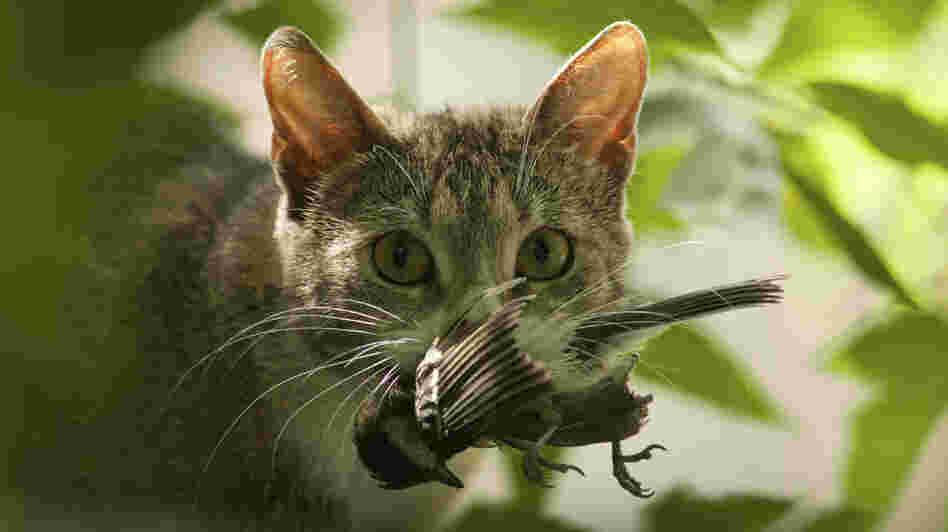
Tá ocras ar an cat! 'Hunger is on the cat!'

When 'to have' is expressed in a Celtic language, it is usually used with a preposition, often 'at' or 'on.' Some examples in Modern Irish (Gaelic):  
Tá cat agam! lit. 'A cat is at me!' meaning 'I have a cat!'
Níl cat agam.. lit. 'No cat is at me..' meaning 'I have no cat..'
bút
Tá ocras orm lit. 'Hunger is on me.' meaning 'I'm hungry'. English doesn't express 'to have' in this case, but for example Dutch does; Ik heb honger lit. 'I have hunger'.
Some examples in Welsh (Northern dialect)
Mae cath gen i lit. 'A cat is with me' meaning 'I have a cat . As you can see Welsh uses the preposition 'with' instead of 'at' or 'on'! No one said it was easy..

I can go on and on about this but in the end, this is what it comes down to. If you have a cat in Celtic languages, it is at you. And hunger is on you. How wonderfully weird, eh? :)

That's it for now!
Love, Lian

Sources photography:
Family tree by myself
Vishnevskiy Vasiliy/Stockphoto  

dinsdag 26 februari 2013

Stories: The Otherworld

Hi guys!!

Detail from the Book of Kells
It's been a long while since I last posted something here. I've decided to pick it up again from today on! My goal is to post something here every few days, from interesting facts to research I'm doing (or have done), from linguistical topics to historical stuff and literature! I hope other people will find it as interesting as I do :)
As I'm a students of Celtic Studies, I'd like to part fact from fiction, and unfortunately Celtic has been a topic surrounded by myths and fiction for a long time. I'd like to show you that even though it may be not as mystical and spiritual as you may think, once those mists part, the facts make Celtic still the most interesting subject in history, linguistics and literature!

Stories
In the Stories-category I will explain some subjects that come up in Medieval Celtic literature, some interesting characters or summaries of tales!

The Otherworld
In Irish as well as some Welsh medieval literature, there is such a thing as the Otherworld. It is a land that has entrances everywhere, sometimes it lies under water, sometimes it is in a sídhe ('fairymound'). It is easily confused with the Underworld/Tartarus in Greek tales and in a way it is a different version of that, but in Celtic tradition the people that die don't usually go to the Otherworld. It is just a world that lies next to ours with it's own people and animals. Also, don't confuse it with New Age-like stories of fairy's living under the hills in Ireland and Britain! That seems to be more a romantic view on Irish tales, made up in the last two centuries. But back to the Medieval Otherworld;
The people that live there never age and never die. Sometimes they are ugly, sometimes they are beautiful, but in every case they are sinless. Of course, this is a concept that was probably a pre-Christian thing, but the Catholic Irish seemed to want to keep the old stories alive and so they wrote them down, albeit with some Christian elements here and there. They figured, if the people from the Otherworld were already parted from humanity befóre the Fall, when Eve brought sin upon us, they would be sinless. It's a nice way of keeping the old stories alive without contradicting the Church!

The animals coming from the Otherworld mostly have weird colours, for example these hounds from Pwyll Pendeuic Dyued ('Pwyll prince of Dyved'): "their hair was of a brilliant shining white, and their ears were red; and as the whiteness of their bodies shone, so did the redness of their ears glisten."
In every Celtic medieval tale, descriptions like these point to an Otherworldly creature! 


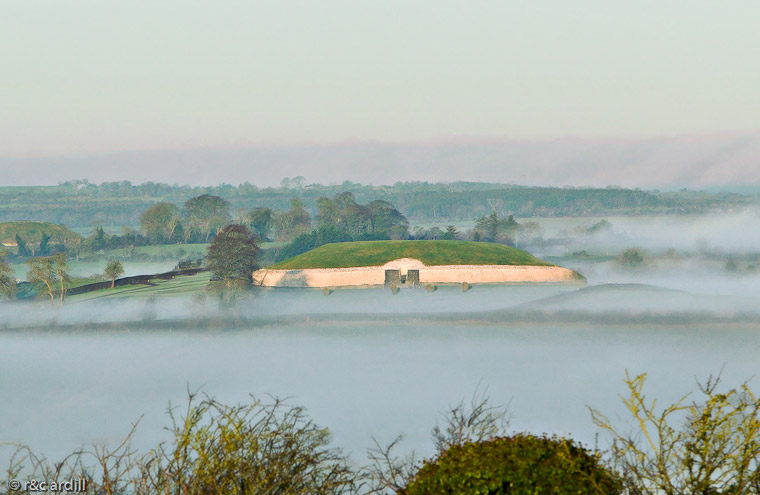
Brú na Boinne or Newgrange is a famous example of a sídhe and an entrance to the Otherworld
The Otherworld appears in very different forms, and is different in Irish literature as opposed to Welsh literature. Some features appear more than once, such as food that never vanishes, and that the time seems to pass differently for people in the Otherworld as opposed to the normal world. In Immram Brain ('The Voyage of Bran') Bran and his fellows travels to the Otherworld until one of them feels homesick. They decide to return, but they are told they musn't touch the land. Nechtan does it anyway and he turns to ashes as hundreds of years have passed and in normal time he was supposed to be dead for a long time.
In Welsh literature the Otherworld also appears like a magical hall wherein time passes very weirdly. (Branwen uerch Lyr 'Branwen daughter of Llyr').

Generally, you should be scared to get stuck in the Otherworld. If you don't watch carefully, the people from the Otherworld will bewitch you so that you will follow them and never return to your family again (as in Echtra Chonnlai, 'The adventure of Connla'), or you die when you return (as in Immram Brain 'the Voyage of Bran'). If the early medieval Celts really believed in the existence of this Otherworld, we may never be able to prove. It just appears in stories and we don't know if they perceived these stories as history or simply literature.

If you're interested in the subject I suggest you read some of this secondary literature, this is just a general introduction to the subject and by no way near a complete analysis.
'Dictionary of Celtic Mythology' by MacKillop
'The otherworld voyage in early Irish literature: an anthology of criticism' by Wooding
'Irish visions of the other-world: a contribution to the study of mediaeval visions' by Seymour
'Music and the Celtic otherworld: from Ireland to Iona' by Ralls-MacLeod
'The Celtic Otherworld' by Nutt (in Folklore Vol. 18)

That's it for now, I hope to see you again soon! 
Love,
Lian


A small bibliography (I'm still a university student..)
'Ancient Irish Tales' by Cross and Slover  
'The Mabinogion' translated by Gantz
Books and articles above

Sources photography:
Book of Kells
Robert and Cathy Ardill